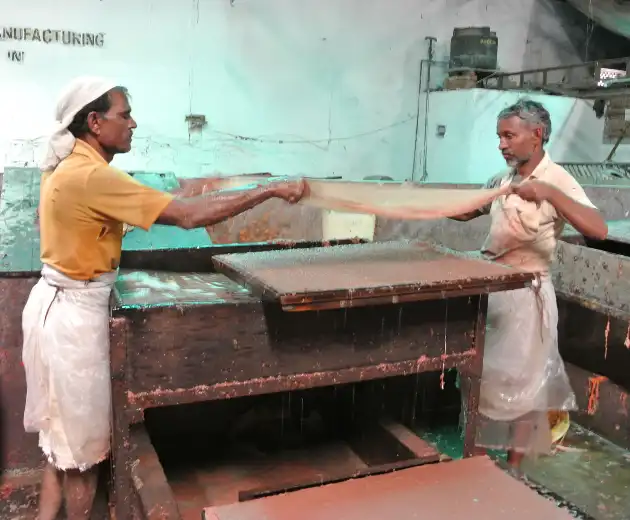
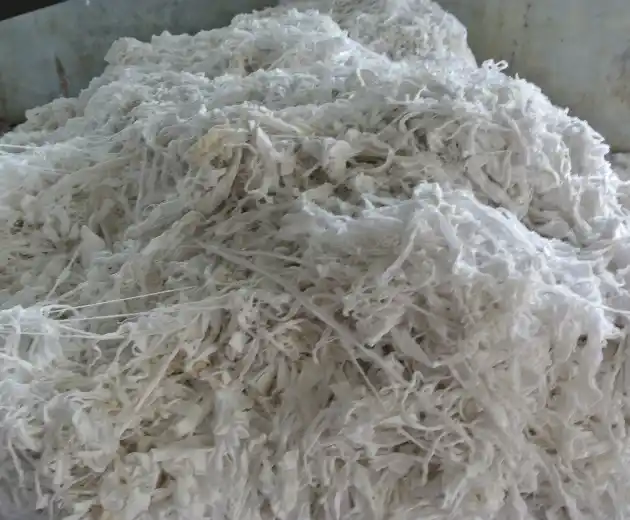
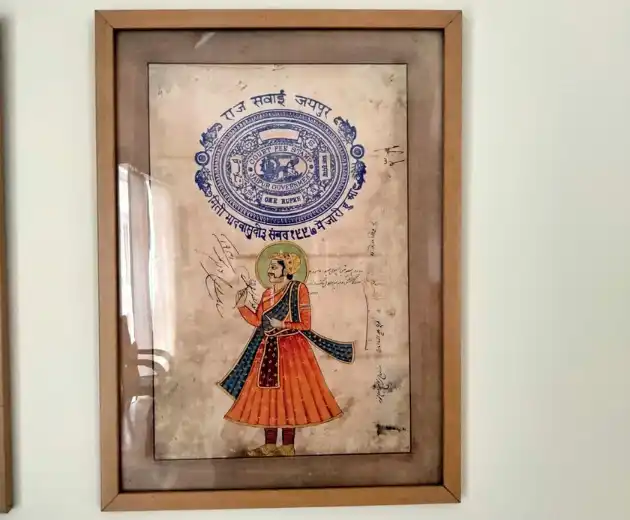
The method of papermaking still practised here was brought to India during the 16th century by invaders from Central Asia. In prisons in Bokhara and Balkh, Chinese inmates had already demonstrated their skill in producing paper from natural waste. The fact that this paper proved to be strong, durable and resistant to alteration or forgery, and could be produced in large quantities, led Babur – the first Central Asian invader to settle down in India and create what came to be known as the Moghul Empire – to encourage some of his men to learn this skill from the Chinese prisoners for use by the Moghul court in India. All court papers came to be prepared on the paper so produced, as also, gradually, did manuscripts and other related articles used by the educated citizenry. Prior to this introduction of paper, writing in India was carved on stone (e.g., Emperor Ashoka’s edicts), handprinted or painted on fabric (e.g., pattachitras), or etched on palm leaves (e.g., Hindu and Buddhist manuscripts).
Read more at Rajasthan’s Local Crafts: Handmade Paper Production